
BISP & Ehsaas Scam Alert Pakistan 2026: Fake Calls, SMS, and SIM Fraud
Fake BISP calls and messages are being used to trick people into sharing their CNIC, OTP, PIN, or money. The caller may say that your payment is blocked, your CNIC needs to be checked, or you have been selected for extra financial help.
If someone calls you about a BISP payment, don’t share your details on the call.
8171 is the official BISP number for SMS. Messages claiming to be from BISP but coming from another number are fake, according to BISP.
BISP also says there is no fee for the survey or registration. So if someone asks you to pay for registration, verification, or release of your payment, don’t send the money.
More:SIM Owner Detail Pakistan
The call may sound real.
Not every fake BISP call sounds like a scam. The person may introduce themselves as a BISP representative and talk about your payment as if they already know your case.
You may hear things like:
- Your BISP payment has been stopped.
- Your CNIC needs verification.
- Your payment is ready.
- You have been selected for additional financial assistance.
- Your SIM needs to be linked or updated.
- You need to pay a small fee before receiving the payment.
The conversation can change quickly once you agree to continue. The caller may ask for the OTP that has just arrived on your phone.
Don’t read it out.
The same goes for your Easypaisa PIN, JazzCash PIN, bank password and other security codes.
If you are not sure about the call, hang up and check the payment yourself.
Be careful with 8171 messages.
Seeing BISP, Ehsaas or 8171 in an SMS does not mean you should automatically trust it.
For example, a message may tell you that your payment has been approved and give you a link. Another may say that your CNIC verification is incomplete and needs to be done immediately.
That link is where you need to be careful.
If you need to check your payment or registration, open the official BISP service yourself. Don’t use a link sent by an unknown number.
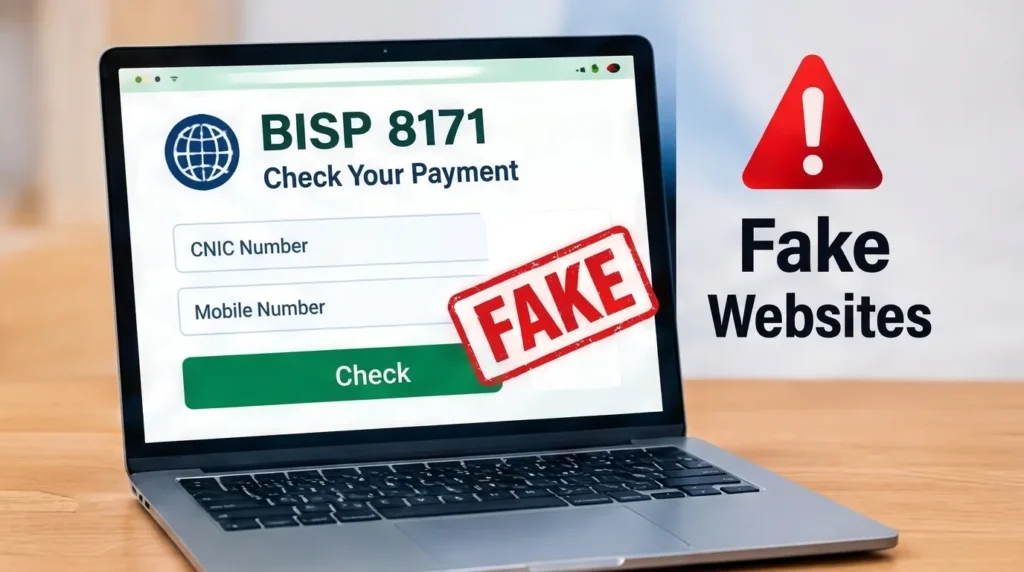
Fake 8171 websites
A search for BISP 8171 can bring up many websites. Some offer payment checks or registration help and use BISP, Ehsaas, or 8171 in their names.
That alone does not make them official.
A site may ask for your CNIC number and mobile number. It may then ask for an OTP or other information.
Don’t enter your OTP, wallet PIN, or banking password on a site you don’t recognise.
If you are unsure about a website, leave it and find the official BISP website or service yourself.
What may a fake BISP caller ask for?
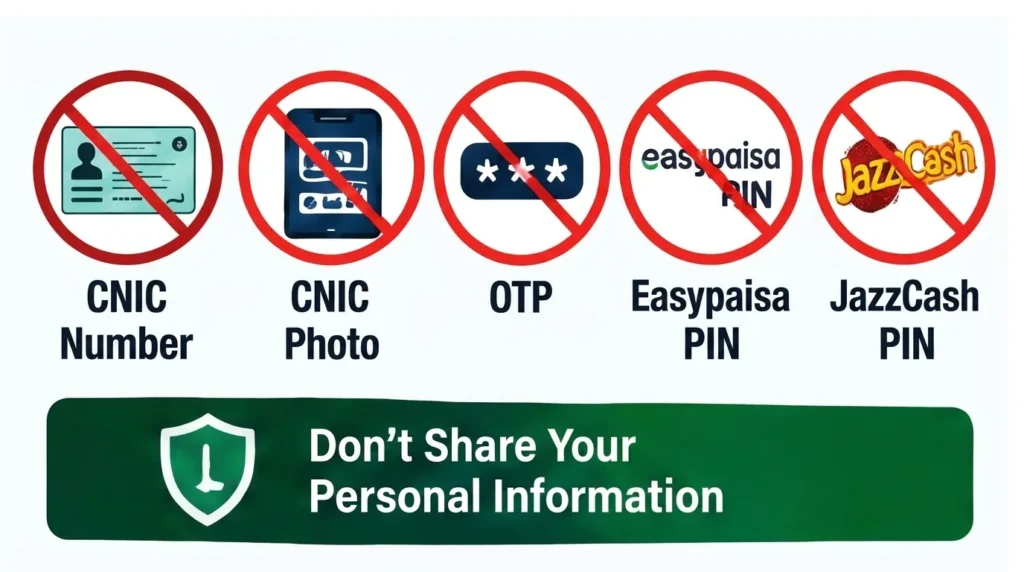
| They ask for | What you should do |
| CNIC number | Don’t give it to an unknown caller |
| CNIC photo | Don’t send it |
| OTP | Keep it private |
| Easypaisa PIN | Don’t share it |
| JazzCash PIN | Don’t share it |
| Bank password | Keep it private |
| Card PIN | Never give it |
| Money for payment release | Don’t pay |
Someone knowing your CNIC number is not proof that they are from BISP.
Can a BISP scam affect your SIM?
Your phone number may be linked with your bank account, Easypaisa, JazzCash, and other services. OTPs and account alerts may also come to that number.
More:How Many SIMs on My CNIC Check Online
So, if your SIM suddenly stops working after a suspicious call, don’t ignore it.
Call your mobile network operator through its official customer service and ask them to check the SIM and number.
More:MNP Status Check Pakistan 2026 – How to Check Your Current Mobile Network
There can be simple reasons for losing network service, so a dead SIM does not automatically mean someone has taken it over. But it is worth checking, particularly when it happens after a suspicious conversation.
I gave my CNIC to a fake BISP caller.
If you have already shared your CNIC, stop there. Don’t send anything else.
Keep the caller’s number. Take screenshots of the messages or conversation if you still have them. Save any website they sent you.
For the next few days, look out for unusual SMS messages, calls, or account alerts.
If something appears that you did not request, contact the relevant company directly using its official number or website.
Giving away your CNIC does not automatically give someone access to your bank account or SIM. The important thing now is not to give them more information.
More:Check SIM Owner Details by CNIC Online in Pakistan
I shared an OTP. What should I do?
If you have shared an OTP, contact the service it was meant for as soon as possible.
For example, if it was related to your bank, Easypaisa, or JazzCash, contact that service and explain what happened.
Check your recent transactions. Change your PIN or password if the service advises you to do so.
And if the same caller comes back asking for another code, don’t give it.
What if I sent money?
Call the bank or wallet service you used.
Keep the details of the payment with you:
- Transaction ID
- Amount
- Receiver’s number or account
- Date and time
- SMS confirmation
- Screenshots
Don’t send another payment because the person says they need it to return your money.
BISP registration and payment fees
A person may contact you and say they can fix your BISP registration or release your payment, but first you need to pay a fee.
They may call it a registration fee, verification fee, processing charge, or file fee.
Don’t pay an unknown person simply because they say they are a BISP agent.
Check the matter with BISP first.
How to report a fake BISP call or message
Before blocking the number, save the information you have.
Keep the phone number, SMS, WhatsApp chat, screenshots, and website address. If you sent money, keep the transaction details too.
The reporting channel depends on what happened. You may need to contact BISP, your mobile network, your bank or wallet provider, or the relevant cybercrime authority.
When you report it, give them the details you saved.
More:Block Unauthorized SIM Online in Pakistan
Keep these things in mind
- Don’t share your OTP, PIN, password, or CNIC with a caller.
- Don’t open payment links sent through unknown SMS or WhatsApp messages.
- Never pay someone who says they can release or fix your BISP payment.
- For a blocked or delayed payment, check the information through BISP directly.
- If your SIM suddenly stops working after a suspicious call, contact your mobile network.
Conclusion
BISP ke naam par aane wali har call ya message genuine nahi hota. Agar koi CNIC, OTP, PIN ya payment maang raha hai, pehle BISP se information verify karein.
8171 ke ilawa kisi number se BISP message aaye to us par bharosa na karein. Registration, verification ya payment release ke naam par kisi ko paisay bhi na dein.
Agar aapne already OTP share kiya hai, paisay bheje hain, ya SIM mein koi unusual problem aa rahi hai, to related bank, wallet ya mobile operator se foran contact karein. Apni personal aur payment information private rakhein.
FAQs
Is 8171 the BISP number?
8171 is used for official BISP SMS communication. Be careful with messages from other numbers.
Can a BISP representative ask for my OTP?
Keep your OTP to yourself. Don’t read it to a caller or send it to an agent.
Is every 8171 website official?
No. A website using “8171” in its name is not automatically a BISP website.
What should I do if my SIM stops working?
Contact your mobile operator through its official customer service and ask them to check your number and SIM.
Are BISP WhatsApp messages genuine?
Not necessarily. Be careful with links and messages asking for your CNIC, OTP, or other personal information.
Does BISP require money to release a payment?
Be careful if someone asks for a private fee before giving you your payment. Check the claim with BISP before paying.
What is the safest way to check my BISP payment?
Check through official BISP information rather than using a link, phone number,r or website sent by an unknown person.